Showing posts with label book review. Show all posts

Sunday

Goodreads review: Star Sand

Noe's review


Star SandStar Sand by Roger Pulvers
My rating: 3 of 5 stars 

From his author page, we read: “Roger Pulvers is an author, playwright, theater director, and translator. He has published more than forty-five books in English and Japanese, including novels, essays, plays, and poetry. He also translates works from Japanese, Russian, and Polish.”

With a résumé like that, you would expect some good work, or at least fair writing. But reading Star Sand is like going through something that was written by a real novice. I did not know the author’s credentials as I was reading his book; I found it at the end on the “about the author” section.

Having just finished Dickens’ Nicholas Nickleby before reading this book, I was glad for the change of pace. The story isn’t long and doesn’t have Dickens’ irritating knack for going on and on. Star Sand is told in three parts: the first during WW2; the second, which is very short, in the 1950’s; and the last section in the 2000’s.

The WW2 part is told through a diary of a sixteen-year-old Japanese American girl who is helping two deserters, one Japanese and the other American. This was getting to the point of being boring due to its repetitious nature of her activities, but thankfully, that is when the section came to an end. The two deserters hole up in a cave on a small island that was far enough removed from the war for it to be a safe haven, though the men could not venture far from the cave for fear of being caught and executed. The girl is there for the relative safety of the place as well.

The story does a pretty good job of showing the absurdity of war, the hating and killing of other humans just because they live on the other side of a line at the orders from some person who says you should. The girl being Japanese American serves well as a symbol of the fact that we are, after all, humans on the planet earth, not just residents of one particular country. I realize most people don’t take a larger world view of things and prefer to look at themselves and others through the lens of nationalism. But there are those that feel like Albert Einstein, who said, “Nationalism is an infantile disease. It is the measles of mankind.” And during war, mankind’s measles comes on at its worst.

I wish Roger Pulvers would have written a more powerful short story, but his ineptitude leaves us with only a fair one that lacks suspense and, most of all, emotion. I give it three stars because he attempted a worthy subject in what could have been an interesting way and because he kept it short.

What the Dickens?

Charles Dickens

I have been reading Nicholas Nickleby for a few weeks now and have some thoughts to share on this author. Movies based on his books are almost certain to be goodOliver Twist, Bleak House, Little Dorrit, and Great Expectations, to name just a few.
Little Dorrit mini-series 2008
But I want to talk about reading his books and his style of writing. Charles Dickens had a rare distinction among artists, which is he was famous while he was alive. People by the millions loved his work back when he was writing and still do to this day. Of course, not everyone was his fan; according to Wikipedia: "Oscar Wilde, Henry James and Virginia Woolf complained of a lack of psychological depth, loose writing, and a vein of saccharine sentimentalism."

I'm not sure I understand what those three were talking about in their complaints against Dickens, but I have a much more simple protest to lodge. To me, he writes like someone who is in love with the sound of his own voice. There is something annoying about the way he drags a scene out that has nothing to do with the storypage after page of silly nonsense between characters of no significance. Dickens seems to try to make up for this fluff by attempting to be witty or by taking some dig at the society of his day. Hey, maybe I do understand what lacking psychological depth, loose writing, and a vein saccharine sentimentalism is after all.


There can be no debate in that he has a way with words and a knack for creating some distinctive characters. But the way he regularly extends things becomes tediously painful and tiresome, since the places he chooses to get carried away have no bearing on the story. It's like going shopping for groceries, but the store is filled with so much other stuff you have trouble finding the food. I don't know about everyone else, but when I'm reading for entertainment, I don't want to wade through this kind of malarkey to find the story. If I wanted to just read words for the sake of reading, I would reach for the dictionary or the encyclopedia.


I have found it interestingly ironic that in Nicholas Nickleby, Dickens actually wrote this about a particular scene: "To recount all the delight and wonder which the circumstances just detailed awakened at Miss La Creevy's, and all the things that were done, said, thought, expected, hoped, and prophesied in consequence, is beside the present course and purpose of these adventures." Had he used that principle throughout his writing, I would consider him a great writer, not just a good one! Instead, he frequently 'recounts all the delights and wonders and things done, said, thought, expected, hoped, and prophesied!'

Half the brilliance of a great artist is to know when to stop adding paint; the other half, I would say, is the subject. I am struck with the idea when reading his works that, if Dickens would have used his creative imagination to embellish the story in the areas involving the storyline and the main characters, this would have been genius. Instead, reading his books is like watching a Humphrey Bogart movieone of those movies where Bogey gets into a cab, at which point the cab driver either nods at Bogart and then he, as the main character, tells the driver where he wants to go ... now, sometimes the cabby will have a line to say, such as: "Where to, Mac?" Or maybe the driver gets to say more, like: "That's a bad side of town ... you sure you want to go there?" In any event, however much or little the cabby gets to say, once he drops Bogey off, that's it for the driver. But in a Dickens story, you would learn the cabby's name, body size, how cleanoh, that's right, this is Dickenshow dirty his cab is, how long he's been married, how many kids he has, why driving a cab is the best job he ever had ... well, if there was such a Dickens tale I was reading, all the while I'd be pulling my hair out, crying, "I don't care about the cabby! I just want to know what happens to Bogey when he meets Bacall in the bad side of town!"
Oliver Twist movie 1948
That is my gripe with Charles Dickenshe becomes the storyteller describing how some old geezer (who you, or at least, I don't really care about) arranges his socks, how his housekeeper can't hear because her hair has been turned up too tight, why she only polishes the silver on special occasions, why he takes two lumps in his tea although he would prefer four, and on and on about this guy and just any and almost everybody in the story! To be sure, this is why the movies based on his books are so much better than the booksthey have cut out all this extraneous material.
Bleak House mini-series 2005
I think what may account for what I consider a pretty big flaw in his writing is that he wrote in installments, putting the stories in a journal and releasing them weekly or monthly. Perhaps if he had just sat down to write an entire book and not simply articles, he may not have gotten lost in what he was supposed to be writing about. I'm surprised he didn't have an editor with the good sense to rein him in, or maybe that's just what the editor wantedsomeone who would write lots of words to fill his magazine for a year or so.

At any rate, there Charles Dickens sits atop the literary world, and here I get this little chance to rant about him. And in today's world, that means he wins, though I will never understand what the Dickens all the fuss is about.


Thank you for reading what noeandcindy.write !
https://www.amazon.com/author/noeandcindy.write
Like us on Facebook: facebook.com/AuthorsNoeandCindy

Tuesday

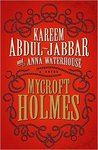
Goodreads review: Mycroft Holmes

Noe's review


Mycroft HolmesMycroft Holmes by Kareem Abdul-Jabbar
My rating: 1 of 5 stars 

If this book was a movie, it would be a bad B movie. The plot, dialogue, and scenes lack imagination and bear all the marks of what is trite. Other than the name Holmes, it has no resemblance to a Holmesian tale.

The story is about Sherlock’s older brother Mycroft, and therein lies another problem. The authors make Mycroft out to be like Sherlock: a man of action, a man that rides into the fray, a man who boxes - he even gives Sherlock a boxing lesson. I don’t like it when someone writes a fanfiction story and changes the character that the original author created; although, if the book is good, this is not so annoying to me. According to Arthur Conan Doyle, Mycroft is nothing like his younger brother from the point of view of physical activity, though he is Sherlock’s equal in intelligence and powers of observation and deduction. But Mycroft is indolent. For goodness sake, he is so averse to activity he founded the Diogenes Club, a club where the exertion of simply talking was not allowed. The sole purpose of the club was to have a place to go and read and be left alone.

What a cool story it could have been to have the real Mycroft, who is so averse to exertion, to be made to pursue a case because his great mind has deduced the necessity and all along the way he is trying to determine how to handle matters with the least amount of effort. That is more what I expected to find, but instead, we have a corny story with lame dialogue ineffectively trying to be a Sherlock Holmes story.
~~~~~

Note: Goodreads rating is as follows:
 did not like it
 it was okay
 liked it
 really liked it
 it was amazing
~~~~~
Amazon Customer Reviews Guidelines 
Frequently Asked Questions from Authors
2. Are authors allowed to review other authors’ books?
Yes. Authors are welcome to submit Customer Reviews, unless the reviewing author has a personal relationship with the author of the book being reviewed, or was involved in the book’s creation process (i.e. as a co-author, editor, illustrator, etc.). If so, that author isn't eligible to write a Customer Review for that book. Please review our Customer Review Guidelines for more information. 

And this About Customer Reviews policy:
Authors and artists can add a unique perspective and we very much welcome their customer reviews[Underlining ours] While we encourage reviewers to share their enthusiasm and experience, there can be a fine line between that and the use of customer reviews as product promotion. We don't allow anyone to write customer reviews as a form of promotion and if we find evidence that a customer was paid for a review, we'll remove it. If you have a direct or indirect financial interest in a product, or perceived to have a close personal relationship with its author or artist, we'll likely remove your review. We don't allow authors to submit customer reviews on their own books even when they disclose their identity[Underlining and italics ours]

Friday

Goodreads review: Ann Veronica

Noe's review


Ann Veronica, a modern love storyAnn Veronica, a modern love story by H.G. Wells
My rating: 2 of 5 stars 

H. G. Wells - that name makes most of us think of science fiction, so when I came across a love story by him, I had to read it. Not because I’m a big Wells fan, though. I have read the Time Machine and War of the Worlds and didn’t like either one. The movies based on those two stories are much better, but still the idea of a science fiction guy writing romance was intriguing.

To be sure, he has a real knack for writing sweet words. I would say some of his expressions are downright beautiful. However, he had a tendency of having his words of romantic sentiment go toward the idea of religious devotion (meaning the men would say things like Ann was deserving of worship, etc) and for me that was distasteful.

As far as the story goes, it started out good. Twenty-one year old Ann Veronica began as an interesting character, a woman struggling with submission to her father or making her own decisions about her life. Wells makes a couple of references to Jane Austen in the context of whether Ann should be like a JA heroine or should she be a modern woman, which is the idea behind the title. I think if he wanted his book to be a counter to JA’s books, though, he should have written a better story. I mean, seriously, don’t mention one of the greatest romance writers of all time in that light without delivering something brilliant!

Unlike Austen he gives no real good reason why Ann Veronica falls in love with the person she ends up with, which is a big deal because the guy is married but separated from his wife. The truth is, all the men in the book are pretty lousy. Granted, one is more lousy than the others, so at best, her options are poor. Elizabeth Bennet would have stayed single with the options he gives in this book. Jane Austen understood, one key ingredient of a great love story is a great guy worth falling in love with.

The character Ann never grows more interesting, she just becomes a girl that makes choices that were hard for this reader to get behind. He created some interesting situations for her, but fails to make them interesting. It was a real challenge to finish the book; usually I don’t bother to finish one that loses my interest like this one did, but I was hoping he would get back to the feel and rhythm of how the book started, yet it never did.
~~~~~

Note: Goodreads rating is as follows:
 did not like it
 it was okay
 liked it
 really liked it
 it was amazing
~~~~~
Amazon Customer Reviews Guidelines 
Frequently Asked Questions from Authors
2. Are authors allowed to review other authors’ books?
Yes. Authors are welcome to submit Customer Reviews, unless the reviewing author has a personal relationship with the author of the book being reviewed, or was involved in the book’s creation process (i.e. as a co-author, editor, illustrator, etc.). If so, that author isn't eligible to write a Customer Review for that book. Please review our Customer Review Guidelines for more information. 

And this About Customer Reviews policy:
Authors and artists can add a unique perspective and we very much welcome their customer reviews[Underlining ours] While we encourage reviewers to share their enthusiasm and experience, there can be a fine line between that and the use of customer reviews as product promotion. We don't allow anyone to write customer reviews as a form of promotion and if we find evidence that a customer was paid for a review, we'll remove it. If you have a direct or indirect financial interest in a product, or perceived to have a close personal relationship with its author or artist, we'll likely remove your review. We don't allow authors to submit customer reviews on their own books even when they disclose their identity[Underlining and italics ours]

Wednesday

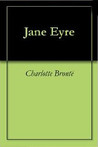
Goodreads review: Jane Eyre

Noe's review

Jane EyreJane Eyre by Charlotte Brontë
My rating: 4 of 5 stars 

Jane Eyre is an excellent story with great characters and is told by a master of the art. Each person that is introduced is brought out in marvelous clarity; even the minor characters in the book are seen as distinct individuals, not just impersonal voices who appear to say a line and then exit stage. Charlotte Bronte’s ability to express feelings and mood often approaches what would best be described as poetry. In addition to this, the conversations are unbelievably terrific. So often a writer excels at one and does the other poorly, but not Charlotte Bronte—she does both with skill and beauty.

Jane Eyre isn’t without fault as far as I’m concerned, though. Three aspects, in particular, keep it from being so:

  • First, there were several places where Bronte went on too long about things that were of no importance to the story and of little interest. I subscribe to the principle: you have a story to tell, tell it without taking long detours. If it was a modern novel, I would say she was concerned about a certain word count, but perhaps they were in her days also, which would explain it. Whatever the reason, there is much that could be cut out with good effect.
  • Second, I wish she would have refrained from addressing the reader. I don’t like that because it dispels the feeling or mood that a scene is creating by reminding me that I am just reading a book. How much sense does it make for a writer to work diligently to pull us into their imaginary world just to snap us out by saying something like ‘dear reader...’ I only want to be reminded that I’m just reading a book when it’s time to stop reading, not while I’m caught up in it. This might best be put under a pet peeve, whereas the other two issues I stand firm about.
  • Third, the conclusion. By that, I mean the very last few paragraphs of the book. Bronte spent them talking about and quoting St. John (the character in the book, not the Bible writer), of all people. It was almost like she felt some pang of conscience about writing what is essentially a secular story and was compelled to end with a religious message and scriptural references. I don’t mind Bible quotes and things like that, but St. John was such an unlikeable character and was of little consequence to the overall story, why have him be the last person we hear about? What mattered most to me when I got to the end was how things turned out for Jane, the person who had gone through so many trials and challenges.

Those three things aside, I will reiterate, this is a wonderful book—indeed, a masterpiece. Anyone who thinks of it just in terms of a romance novel is basing their opinion on some movie adaptation and not the book. Not that I think romance novels can’t be great; Jane Austen puts the lie to that notion. But to distill Jane Eyre to just a story about a man and woman falling in love is as ridiculous as relegating it to simply a story written for young girls to read. It is epic in its scope of covering the range of human emotions and doing so in a way that a person would have to be made of marble not to be touched. The book masterfully takes us through the depths of despair and the heights of great joys and even the everyday coping with life with the flare that only a genius can. So glad I got a better copy and was able to read the real story.

Note: Goodreads rating is as follows:
 did not like it
 it was okay
 liked it
 really liked it
 it was amazing
~~~~~
Amazon Customer Reviews Guidelines 
Frequently Asked Questions from Authors
2. Are authors allowed to review other authors’ books?
Yes. Authors are welcome to submit Customer Reviews, unless the reviewing author has a personal relationship with the author of the book being reviewed, or was involved in the book’s creation process (i.e. as a co-author, editor, illustrator, etc.). If so, that author isn't eligible to write a Customer Review for that book. Please review our Customer Review Guidelines for more information. 

And this About Customer Reviews policy:
Authors and artists can add a unique perspective and we very much welcome their customer reviews[Underlining ours] While we encourage reviewers to share their enthusiasm and experience, there can be a fine line between that and the use of customer reviews as product promotion. We don't allow anyone to write customer reviews as a form of promotion and if we find evidence that a customer was paid for a review, we'll remove it. If you have a direct or indirect financial interest in a product, or perceived to have a close personal relationship with its author or artist, we'll likely remove your review. We don't allow authors to submit customer reviews on their own books even when they disclose their identity[Underlining and italics ours]