Jane Austen's master touch in creating a female character, putting her in the perfect situation to bring out that which defines her, serves as one of the main ingredients by which the tension of the story builds. Today let’s consider her book …
MANSFIELD PARK
I might get slapped for this, but I say Mansfield Park is the only story where there is a true rivalry for the affections of the same person, Edward Bertram.
The two women in question are Fanny Price and Mary Crawford. Fanny is Edward’s cousin, and her family is very poor; whereas Edward’s family is very rich and live in Mansfield Park. Fanny is permitted to live with the Bertrams out of kindness.
Mary Crawford is a wealthy, sophisticated lady, the kind of lady that is antagonistic with the object of her affection, having all the charm and looks so as to keep the guy coming back for more.
Fanny, coming from such poverty and being reminded by her cousins that she is not a Bertram but a poor Price, develops the strength of an honorable character. Her sense of gratitude turns out to be far more appealing, because of the genuineness of it, than all of Mary Crawford’s sophistication and practised man-baiting.
Noe

Thursday
Heroines... post five on Jane Austen
CONTINUING OUR LOOK AT JANE AUSTEN'S HEROINES
 This story had the title "Elinor and Marianne" to begin with, and that's quite appropriate, but the latter title is even more so. Here we have two heroines, the Dashwood sisters: Marianne, who is 17 years old, and Elinor, who is 19. Right from the start, the girls go from great wealth to having very little, because they have a rat — with a capital R — for a half-brother. Despite explicit instructions from his father on his deathbed, the man refuses to help in even the smallest way when he dies and, as so many rules of inheritance back then play out, everything goes to the Rat.
 Happily, a relative of their mother saves them from poverty and offers a small cottage for the bereaved family to live in. Ere long, Marianne has Colonel Brandon showing a clear interest in her. However, she is uninterested because he is twenty years older! — which is actually refreshing, considering in those days old guys are always marrying teenagers and no one seems to bat an eyelash! Anyway, Marianne is filled with vitality both physically and emotionally and she figures an older man just won't do ... enter Willoughby, a dashing
 young man who is handsome, loves the same poetry as Marianne, and (to top it off) will inherit plenty from his aunt. Just as things seem to be turning up roses for Marianne, Willoughby abruptly leaves, with no hope of returning. This turns Marianne into one of the most lovelorn figures in Austen’s world.

 Then there is Elinor, who is prudent and rational — and it is a good thing, too! Her situation becomes complicated: she develops feelings for one Edward Ferrars, only to learn from Lucy Steele that he is secretly engaged to ... Lucy Steele! I know this makes Edward sound like a scoundrel, but he really isn’t, and Elinor knows that. Now, with Marianne torn up over Willoughby, and a mother that acts more like a younger sister than a mother, Elinor must bear her emotional turmoil with patience and a deep regard for doing what is right.
With Marianne’s emotional openness playing off Elinor’s silent endurance, what is created is a gripping emotional drama that makes you yearn for something good to happen to the Dashwood girls. Once again, Jane Austen has created an intriguing story with strong female main characters.

Noe
Sense and Sensibility

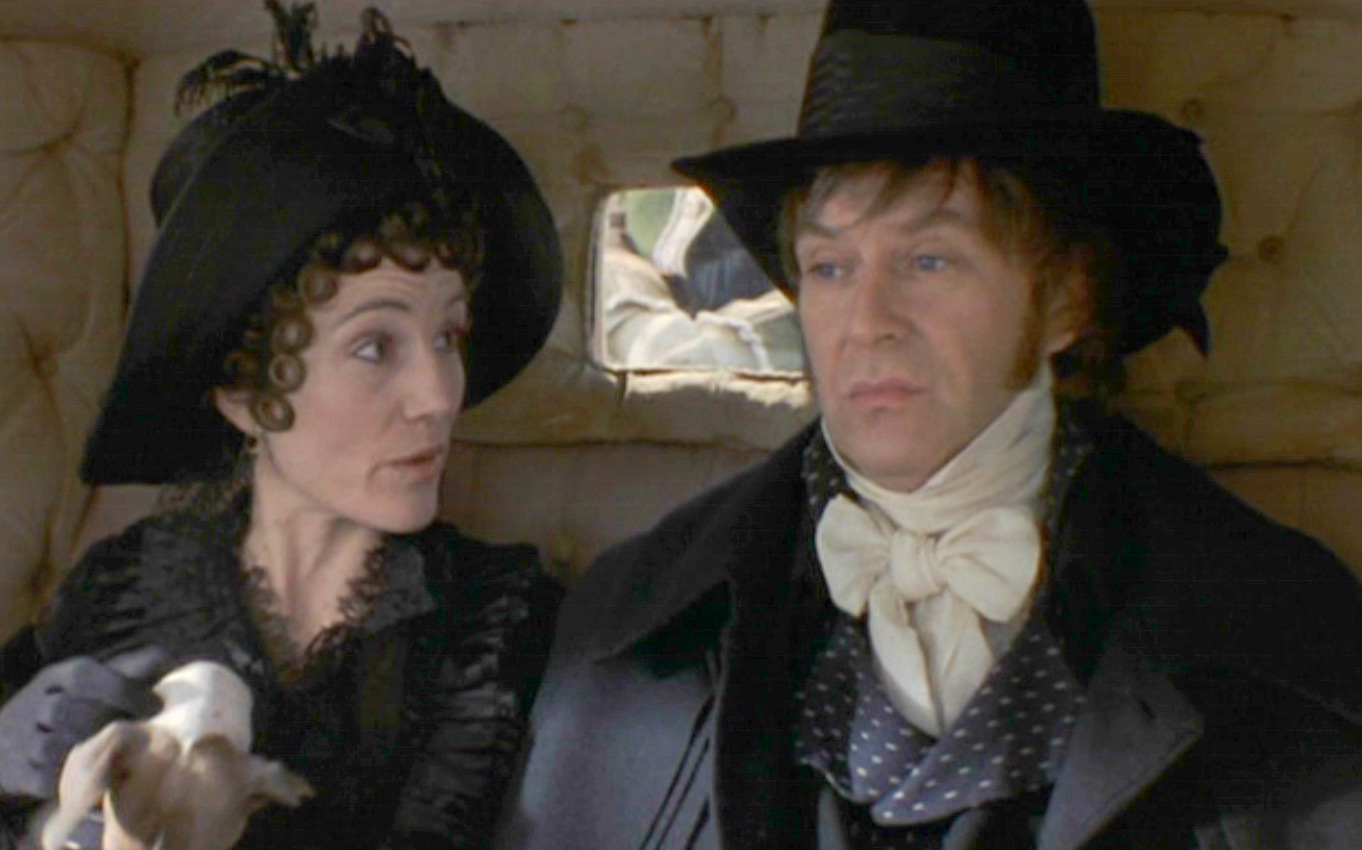 |
| The RAT brother |
 Happily, a relative of their mother saves them from poverty and offers a small cottage for the bereaved family to live in. Ere long, Marianne has Colonel Brandon showing a clear interest in her. However, she is uninterested because he is twenty years older! — which is actually refreshing, considering in those days old guys are always marrying teenagers and no one seems to bat an eyelash! Anyway, Marianne is filled with vitality both physically and emotionally and she figures an older man just won't do ... enter Willoughby, a dashing


With Marianne’s emotional openness playing off Elinor’s silent endurance, what is created is a gripping emotional drama that makes you yearn for something good to happen to the Dashwood girls. Once again, Jane Austen has created an intriguing story with strong female main characters.

Noe
Get your free Amazon Kindle apps
Heroines... post four on Jane Austen
Heroines, beginning with Northanger Abbey
Jane Austen has the touch of a master in creating a main character and then putting her in a perfect situation, one that brings out the characteristics which define the heroine. With that, the main ingredients are set by which the tension of the story builds. For instance, today let’s briefly consider her book Northanger Abbey.
 The heroine of this story is Catherine Morland, a naive country girl who is taken out into society for the first time by her family's childless neighbors, Mr. and Mrs. Allen. In Bath — which is actually a place in England, despite how it might sound — she meets Henry Tilney. This fine, witty young man comes from a wealthy family, and he is immediately captivated by Miss Morland's innocence and simple country manners. Henry’s father, who is more interested in money and position, is informed by someone that Catherine is to inherit a great fortune from Mr. Allen, but this is simply false.
As a true genius, Austen has made young Catherine an avid reader of Gothic stories, and this admits a closer look at her inexperience and simple-mindedness, not to mention creates a fertile ground for her wild imagination. When she is taken to the Tilney's home, Northanger
 Abbey, which is an old monastery being done over in as modern a fashion as that time period would permit, the outward appearance and interior design is enough for Catherine to be carried away under the influence of her Gothic stories!
What will Miss Austen do now? Will love bloom between Henry and Catherine? ... or is to be strangled in the dark halls of Northanger Abbey? With each time I read this tale, I grow more fond of the young heroine Catherine Morland and am sure you will too.
Noe
Jane Austen has the touch of a master in creating a main character and then putting her in a perfect situation, one that brings out the characteristics which define the heroine. With that, the main ingredients are set by which the tension of the story builds. For instance, today let’s briefly consider her book Northanger Abbey.

As a true genius, Austen has made young Catherine an avid reader of Gothic stories, and this admits a closer look at her inexperience and simple-mindedness, not to mention creates a fertile ground for her wild imagination. When she is taken to the Tilney's home, Northanger

What will Miss Austen do now? Will love bloom between Henry and Catherine? ... or is to be strangled in the dark halls of Northanger Abbey? With each time I read this tale, I grow more fond of the young heroine Catherine Morland and am sure you will too.
Noe
Saturday
Poems that rhyme
I have been reading about Lord Byron, because he is so often mentioned in some of the movies I watch, and I was feeling a bit unenlightened. He is often described this way:
Here's an example of Byron’s poems: "She Walks in Beauty"
While doing research for this article, I came across this site
and realized how ignorant I was on the subject of poetry: Types of Poetry
In my defense, I have never claimed to know all about poetry, only that I prefer to write...
poems that don’t rhyme ... for this I hope I will not be asked to do time.
Then fear of fears ... I learnt from my wife of many years --
for whom I have written poems of any number
some of which were very clever
but none of which have rhymed...
poems that rhyme are what she prefers!
I was letting all this sink in while I listening to Anna Graceman sing "Give Me Your Heart" on Youtube in which she has a line about various fairy tales, and I was reminded of a song I had rolling around in my mind from a long time ago... mine had a reference to Little Boy Blue. Anyway, I decided, after hearing Anna’s song, to write a poem that rhymes dedicated to my sweet wife:
“He is regarded as one of the greatest British poets and remains widely read and influential.”When I read that, I really felt I had missed something. Then I was surprised to find that his poems rhyme. Well, it has always been my opinion that poems that rhyme are a bit adolescent.
Here's an example of Byron’s poems: "She Walks in Beauty"
While doing research for this article, I came across this site
and realized how ignorant I was on the subject of poetry: Types of Poetry
In my defense, I have never claimed to know all about poetry, only that I prefer to write...
poems that don’t rhyme ... for this I hope I will not be asked to do time.
Then fear of fears ... I learnt from my wife of many years --
for whom I have written poems of any number
some of which were very clever
but none of which have rhymed...
poems that rhyme are what she prefers!
I was letting all this sink in while I listening to Anna Graceman sing "Give Me Your Heart" on Youtube in which she has a line about various fairy tales, and I was reminded of a song I had rolling around in my mind from a long time ago... mine had a reference to Little Boy Blue. Anyway, I decided, after hearing Anna’s song, to write a poem that rhymes dedicated to my sweet wife:
Cinderella, Snow White, and Romeo and Juliet
They all found love to be it
The story was not always easy
Sometimes the story turned out awfully
Like it did for Romeo and Juliet
But they found love to be it.
Love is not a bedtime story
It doesn’t always make you rest calmly
Love can be like a fire in your bones
Raising you up as if you were on a throne
Like Romeo and Juliet
We can find that love is it.
Noe
copyright ©2012
Get your free Amazon Kindle apps
Friday
The right magic
Describing the Sarah’s World books, I have said: “The stories are not filled with witches, swords, magicians and such, but are written in the belief that children are intelligent and can find enjoyment and interest in the real world just being kids.” In saying this, I was not suggesting that I am against children’s stories containing make-believe with talking animals and such things. Make-believe really is different than magic, although it can be called "magic" in a sense, and that's okay. In fact, I have made up more than a few stories like that, with my niece being the main character. I haven’t published them yet, but do intend to, although none of my stories will have witches or sorcery, since I feel those subjects are not entertaining.
Years ago when my niece was young, Cindy and I recorded a few of these stories on audio cassette, with Cindy playing the part of my niece and I voiced all the other parts. We even included our cat Shem in one of the stories -- Cindy had to squeeze him to get him to say his part on que! This is not really a picture of Shem, but he looked just like this guy... we really loved him, he was so smart. He would even play hide-and-seek with Cindy! Everyone should have a Maine Coon cat:

Sadly, it was so long ago that the tape of our stories for my niece no longer exists, but those were some real "magic" adventures with singing animals and a faraway island. It was a fun project for us to do, and my niece loved listening to it over and over. It's a great gift idea for aunts and uncles or parents to make for a young person in their life.
I am presently working on a larger story for Sarah’s World, and when I’m finished with that one, hopefully you will see some of these other stories published.
Take a look at the books in Cindy’s book store for some nice stories for little ones and older kids too. (See the Kids Books and Great Reads pages)
Years ago when my niece was young, Cindy and I recorded a few of these stories on audio cassette, with Cindy playing the part of my niece and I voiced all the other parts. We even included our cat Shem in one of the stories -- Cindy had to squeeze him to get him to say his part on que! This is not really a picture of Shem, but he looked just like this guy... we really loved him, he was so smart. He would even play hide-and-seek with Cindy! Everyone should have a Maine Coon cat:

Sadly, it was so long ago that the tape of our stories for my niece no longer exists, but those were some real "magic" adventures with singing animals and a faraway island. It was a fun project for us to do, and my niece loved listening to it over and over. It's a great gift idea for aunts and uncles or parents to make for a young person in their life.
I am presently working on a larger story for Sarah’s World, and when I’m finished with that one, hopefully you will see some of these other stories published.
Take a look at the books in Cindy’s book store for some nice stories for little ones and older kids too. (See the Kids Books and Great Reads pages)
Get your free Amazon Kindle apps
Thursday
Cartoon: Fred and Ted 2


Wednesday
Responsibility ... post three on Jane Austen books
Something I really like about Jane Austen's writings
In my previous post, I hit upon some things that I consider odd about the England of Jane Austen’s time. Today I’d like to mention something I truly appreciate about her time that we don’t often find in ours ... a sense of responsibility, for both the immediate and extended family as well as for the community.
Briefly, here are a few instances I’m referring to:


In Pride and Prejudice, the Gardiners often extend hospitality toward their nieces by inviting them to come to their home and by taking them on their travels. Even more so, they really put themselves out when their youngest niece gets herself into trouble.
In Mansfield Park, Fanny’s aunt and uncle help her brother in procuring a position as a sailor and then take her into their home to alleviate some of the financial burdens of her parents (they later take another of her sisters as well).


Many more instances could be offered, but for those who enjoy reading a story well-written, without licentious behavior being described, and honorable characters displaying both their strengths and weaknesses, a person could hardly do better than picking up something Jane wrote.
~ Noe
In my previous post, I hit upon some things that I consider odd about the England of Jane Austen’s time. Today I’d like to mention something I truly appreciate about her time that we don’t often find in ours ... a sense of responsibility, for both the immediate and extended family as well as for the community.
Briefly, here are a few instances I’m referring to:


In Pride and Prejudice, the Gardiners often extend hospitality toward their nieces by inviting them to come to their home and by taking them on their travels. Even more so, they really put themselves out when their youngest niece gets herself into trouble.
In Mansfield Park, Fanny’s aunt and uncle help her brother in procuring a position as a sailor and then take her into their home to alleviate some of the financial burdens of her parents (they later take another of her sisters as well).


In Sense and Sensibility, even though her stepson and his family don’t help her, Mrs. Dashwood is offered a small house “belonging to a relation of her own, a gentleman of consequence and property... He understood that she was in need of a dwelling, and though the house he now offered her was merely a cottage, he assured her that every thing should be done to it which she might think necessary, if the situation pleased her.”
As we know from the book bearing her name, Emma Woodhouse is concerned with the less fortunate and makes a regular habit of visiting them, always with something for their welfare.
As we know from the book bearing her name, Emma Woodhouse is concerned with the less fortunate and makes a regular habit of visiting them, always with something for their welfare.

Many more instances could be offered, but for those who enjoy reading a story well-written, without licentious behavior being described, and honorable characters displaying both their strengths and weaknesses, a person could hardly do better than picking up something Jane wrote.
~ Noe
Get your free Amazon Kindle apps
Tuesday
Odd to me... second post on Jane Austen books
Getting this out of my system first
 I will not attempt to rate the novels of Jane Austen as if I could say one is better than another. Obviously, I may like one more than another, but it would be over-reaching, as far as I’m concerned, to say my opinion actually means one is better than the rest. I have read Pride and Prejudice more than all the others; I read it once a year, in fact, and am therefore more familiar with it. I have read Persuasion several times, followed by Emma, Sense and Sensibility, Northanger Abbey, Mansfield Park.
What I want to do in this post is mention some things that have always struck me as odd about the British and, of course, these are just my own views. One that is often portrayed in Austen’s books is that they marry their cousins or are arranged to be married to their cousins. I don’t know if that is something that was done by the upper class only, or if all people did that. Is it even still a practice today?
Another thing, the man is usually much older than the girl he marries, and she is usually quite young herself. I have often wondered, is that why they do not show affection openly? That’s another one of those things I don’t understand about the British, it's as if they feel it is wrong to show affection to their families. Yet they resort to having extra-marital affairs ... at least, that's the way it is in movies. Jane Austen doesn't have much of that sort of thing in her novels.
One more thing, though, is how strongly they are shown to observe class distinctions: the way a person of rank, as they say, is not even to be addressed by someone lower in their eyes. I would think that’s in the past now, but perhaps not. I do wonder what Miss Austen thought of all that.
Anyway, criticising those things is not my purpose here, but I am attempting to get all the strangeness I see out of the way before considering other aspects of Jane Austen's books, as they are some of my favorites to read.
~ Noe

What I want to do in this post is mention some things that have always struck me as odd about the British and, of course, these are just my own views. One that is often portrayed in Austen’s books is that they marry their cousins or are arranged to be married to their cousins. I don’t know if that is something that was done by the upper class only, or if all people did that. Is it even still a practice today?
Another thing, the man is usually much older than the girl he marries, and she is usually quite young herself. I have often wondered, is that why they do not show affection openly? That’s another one of those things I don’t understand about the British, it's as if they feel it is wrong to show affection to their families. Yet they resort to having extra-marital affairs ... at least, that's the way it is in movies. Jane Austen doesn't have much of that sort of thing in her novels.
One more thing, though, is how strongly they are shown to observe class distinctions: the way a person of rank, as they say, is not even to be addressed by someone lower in their eyes. I would think that’s in the past now, but perhaps not. I do wonder what Miss Austen thought of all that.
Anyway, criticising those things is not my purpose here, but I am attempting to get all the strangeness I see out of the way before considering other aspects of Jane Austen's books, as they are some of my favorites to read.
~ Noe
Monday
Jane Austen books
COMPARE
This is the first in a series of posts on Jane Austen and her works that I want to do. Austen's books are a favorite part of my library, as are the movies that have been made on them. It is really too bad she died so young and was prevented from giving us what she would have created later.
 One of the aspects of her writing that I find so appealing is her focus on the characters’ thoughts and feelings with an economy of words. She has a comical cleverness that rivals Oscar Wilde, and a sense for the dramatic coupled with a flare for suspense. For instance, in each of her works she builds a series of let-downs and obstacles for the characters without being corny or cliche, even though if she would have come up with something way back in her time it wouldn’t have been cliche; and the fact that today the stories are still fresh and interesting to read is a credit to her.
For comparison’s sake, to be sure, the stories of Jane are not as intricate as those of Charles Dickens, but then they were writing about two different worlds. Dickens brought the lowest and poorest of London society across the path of the class of society Austen wrote about. In the world according to Jane, one would never know such a place as the slums of London with its low individuals even existed because she didn’t write about that like Dickens did. Consequently, Austen’s books keep a light, lively feel, even when the characters are reduced to comparative poverty. Perhaps it is this aspect of her books I like most; one can read about triumph through adversity without getting "dirty" like you do when you read Dickens.
Jane Austen's notable books (no particular order):
Pride and Prejudice
Emma
Persuasion
Sense and Sensibility
Northanger Abbey
Mansfield Park
~ Noe
This is the first in a series of posts on Jane Austen and her works that I want to do. Austen's books are a favorite part of my library, as are the movies that have been made on them. It is really too bad she died so young and was prevented from giving us what she would have created later.

For comparison’s sake, to be sure, the stories of Jane are not as intricate as those of Charles Dickens, but then they were writing about two different worlds. Dickens brought the lowest and poorest of London society across the path of the class of society Austen wrote about. In the world according to Jane, one would never know such a place as the slums of London with its low individuals even existed because she didn’t write about that like Dickens did. Consequently, Austen’s books keep a light, lively feel, even when the characters are reduced to comparative poverty. Perhaps it is this aspect of her books I like most; one can read about triumph through adversity without getting "dirty" like you do when you read Dickens.
Jane Austen's notable books (no particular order):
Pride and Prejudice
Emma
Persuasion
Sense and Sensibility
Northanger Abbey
Mansfield Park
~ Noe
Sunday
Original poem: Words of the Heart
Words of the heart...
How they long to be heard.
By the eyes and what they express;
By the touch and what it means.
Can I utter speech that could convey?
A third of my life is made of you!
Words of the heart...
By time alone can they be heard.
By the way love for you still grows;
By the way I am forever yours.
Can I utter speech that could convey?
The way I feel this tenth anniversary day.
I love you.
Noe
copyright ©1987
written for my wife for our 10th anniversary
How they long to be heard.
By the eyes and what they express;
By the touch and what it means.
Can I utter speech that could convey?
A third of my life is made of you!
Words of the heart...
By time alone can they be heard.
By the way love for you still grows;
By the way I am forever yours.
Can I utter speech that could convey?
The way I feel this tenth anniversary day.
I love you.
Noe
copyright ©1987
written for my wife for our 10th anniversary
Subscribe to:
Posts (Atom)